
The economic survey for 2020-21 has suggested revision in the weightage of food items to gauge the true picture of inflation in the country, and said new sources of price data also need to be incorporated in the wake of increasing retail e-commerce transactions. As per the survey, the current spike in consumer price-based retail inflation of food prices is mainly a supply-side phenomenon. The survey noted that the weights of all items in retail inflation are based on the NSO household consumption expenditure survey of 2011-12, adding the weight of food items in the index might have significantly decreased over the decade since then.

The outbreak of the Omicron variant of the coronavirus and unprecedented lockdowns in China have roiled its equity market and also that of Hong Kong. After the crisis-hit Sri Lanka, China and Hong Kong are the worst-performing stock markets in Asia on a year-to-date basis.

The government on Monday said the financial system has a surplus liquidity of about Rs 1,00,000 crore (Rs 1 trillion) in the system due to huge foreign exchange flows.

'Such big falls are quite frequent these days, so do not try to time this market.' 'Use big dips to accumulate quality stocks.'

A yellow glow is likely to stand out amid grey geopolitical clouds in 2023, with gold price projected to touch Rs 60,000 per 10 grams in the Indian market as more investors veer towards safe-haven assets. In a year where volatility was more a norm than an exception, gold prices in the international market oscillated from a peak of $2,070 per ounce in March to a low of $1,616 per ounce in November and is steadily recovering since then, according to market experts. At the beginning of 2022, gold prices were around $1,800 an ounce.

Endorsing Prime Minister Narendra Modi's vision of India outlined in his address to Parliament, India Inc said the efforts to improve farm productivity, rein in price rise and impart skills to youth will transform the nation in the days to come.

'You should always maintain an allocation to gold as it has the ability to counterbalance any correction in the equity market.'
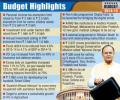
The Congress feels there was no articulation of a bold vision of a statement of intent in the Budget, no articulation of a direction in which the economy has to go, and it lacks imagination. Renu Mittal reports.
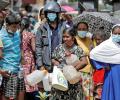
New Delhi has a chance to rid itself of its image as the bully in the subcontinent by helping a neighbour tackle problems that India, for once, has no role in creating. It should grab the opportunity with both hands, suggests Aditi Phadnis.

India's current account deficit is expected to deteriorate in the current fiscal on account of costlier imports and tepid merchandise exports, according to the Finance Ministry's monthly economic review. The review released on Thursday by the ministry also said that global headwinds would continue to pose a downside risk to growth as crude oil and edibles, which have driven inflation in India, remain major imported components in the consumption basket. For the present, it said, "their global prices have softened, as fears of recession have dampened prices somewhat. This would weaken inflationary pressures in India and rein in inflation."
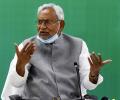
The Nitish Kumar government in Bihar came under fresh attack on Monday from state Bharatiya Janata Party president Sanjay Jaiswal whose party seems annoyed with junior ally Janata Dal-United's shrill demands for special assistance from the Centre.

Indian rupee is likely to test 76-76.50 levels as a relatively strong greenback, boiling crude prices and COVID headwinds deepen the depreciation bias for the domestic currency, according to experts. One of the significantly-hit Asian currency in recent months amid uncertain economic times, rupee is expected to see a consolidation in the vicinity of the current level before being pulled towards the depreciation bias. While the equity market has been surging with occasional blips, the rupee has mostly been weak against the US dollar in recent months.

Industry bodies called for implementation of measures announced in the Budget to arrest inflation, saying these would pave the way for a stable inflation regime.

Experts believe FPIs will keep a close watch on coronavirus pandemic, its spread and likely impact on the economy while making decisions about investment into India.

India's economy is unlikely to see double-digit growth and may grow between 8 per cent and 9 per cent this fiscal year (2021-22, or FY22), against the estimated 11.5 per cent, according to leading economists and rating agencies. The downward revision of growth projections to as low as 10 per cent is mostly on account of stringency in restrictions by states, relatively slow vaccination pace, and the possibility of a third wave of the pandemic. However, they say the impact will not be as severe as the first wave, and expect the first quarter to see positive growth.

If the government is able to deliver the promised projects, the large number of youth will be taken off the streets and that is not acceptable to the Pakistan army nor the terrorists hiding in Pakistan, notes Brigadier Narender Kumar (retd).

The rupee is stable, and a number other of measures have been taken to bring stability in the capital market, the FM said.

Professional football has been wiped off the map for weeks, maybe months, after all the major leagues, cups and international competitions were suspended, culminating in the postponement of Euro 2020 and Copa America on Tuesday.
A top UN body dealing with trade and development issues has recommended "deep and lasting" reforms to avoid a repetition of the current economic downturn.
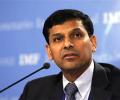
Over the last two weeks, the RBI has lifted short-term rates to help support the currency

IMF Chief Economist Gita Gopinath also said the pickup in global growth for 2020 remains highly uncertain as it relies on improved growth outcomes for stressed economies like Argentina, Iran, and Turkey and for under-performing emerging and developing economies such as Brazil, India, and Mexico.

As FY20 Budget fiscal measures need to be better understood, a reversal of the stance back to neutral will allow MPC flexibility to respond to incoming data.

The private demand is still not picking up and the funds under market stabilisation scheme are also maturing.

The finance ministry and RBI must get less conservative and improve co-ordination.

Pakistan's offer to normalise relations with India is an attempt to buy temporary peace due to its economic and politico-strategic compulsions, notes Brigadier Narender Kumar (retd).

'This year's Budget didn't give into populist measures everyone was expecting after demonetisation, so I think that was a positive step.' 'Hopefully the Budget will continue in the way it has been.'

The government will announce minimum support prices for kharif.
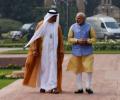
Terming his discussions as 'fruitful and productive', Modi said the discussions were wide ranging, covering the entire spectrum of the bilateral engagement.

He has had a productive first year at the RBI -- one which saw, also, India's economic imbalances improve and the unexpectedly strong general election outcome.

Is the worst over for Indian banks? The past two years saw them ride on treasury trades as deposits soared and credit growth dipped sharply. Gross and net non-performing assets (NPAs) moved south, and the provision coverage ratio (PCR), capital buffers, and profitability indicators are back at pre-pandemic levels. So, what's the plot ahead?

Many are now hoping the markets remain in good stead as they look to finalise the dates for IPOs, such as UTI MF, Computer Age Management Services, Happiest Mind, and Angel Broking. Most of the issues are expected to come to the market in the second half of September.

India's fiscal deficit trends are a bit like an alcoholic trying, unsuccessfully, to reform. Virtue does not last for too long, says Shankar Acharya.

Markets now expect the Fed to normalise rates gradually.

This could be attributed to the attractive valuation of the Indian equities after the sharp correction during the first quarter of calendar year 2020 and significant depreciation of the Indian rupee against USD, which provided them a rather good entry point.

Of the Rs 20-lakh-crore package that Prime Minister Narendra Modi announced to defend the economy against coronavirus disruptions, fresh support may be only around 60 per cent of the offer as it counts the first financial stimulus and liquidity support that Reserve Bank has given already, and will overburden the bond market, says a report.

If the government cuts wasteful expenditure as it is trying now, the deficit would at most fall to 8 per cent, not less than that.

China's economy, which suffered 6.8 per cent slump in the first quarter due to the coronavirus pandemic -- the worst in 44 years -- bounced back posting 4.9 per cent growth between July and September buoyed by the government's sweeping efforts to stimulate demand and consumption.

Most private companies are not initiating large projects.

Companies in China, South Korea and Indonesia pay 25 per cent tax, while those in Malaysia pay 24 per cent. Only Japan has a higher tax than India at 30.6 per cent. Hong Kong has the lowest corporate tax rate of 16.5 per cent while Singapore has 17 per cent rate and Thailand and Vietnam levy 20 per cent tax on companies.

Economists have said if a stimulus is needed it should be different from what was provided in 2008-09, when the economy faced the ripple effects of a global meltdown following the Lehman Brothers collapse.
 © 2026 Rediff.com - Advertise with us - Disclaimer - Privacy Policy - Sitemap - Feedback - About us - Terms of use - Grievances